
The session will conclude on July 3.

On Friday, January 31, 2025, Finance Minister Nirmala Sitharaman presented the Economic Survey 2024-2025 in the Lok Sabha.

The Comptroller and Auditor General of India (CAG) has launched an integrated audit across 32 states and Union Territories to assess the ease of doing business for the micro, small and medium enterprise (MSME) sector.

For every rupee in the government coffer, the biggest pie of 66 paise will come from direct and indirect taxes, according to the Union Budget 2025-26 documents. Around 24 paise will come from borrowings and other liabilities, 9 paise from non-tax revenue like divestment, and 1 paise from non-debt capital receipts, the Budget documents said.

This has been our history of good governance: Things that were difficult to do and required planning and implementation were first taken up and then abandoned, notes Aaakr Patel.

Savitri and Narayanan Sitharaman arrived in a separate car in Parliament.

The opposition has been demanding a debate on Operation Sindoor -- the strike on terror sites in Pakistan by the Indian armed forces in response to the terrorist attack in Pahalgam on April 22.

The Parliament resumes on Monday after a break. WATCH THE LIVE DEBATES HERE.
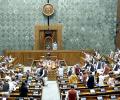
India's opposition parties have sharply criticized the Union Budget, calling it inadequate to address the country's economic woes and accusing the BJP-led government of using it to woo voters in Bihar and Delhi ahead of upcoming elections. Leaders from the Congress, TMC, DMK, SP, and CPI(M) voiced their disapproval, highlighting concerns over inflation, unemployment, and the lack of substantial measures to support the agricultural sector and the poor. They also criticized the tax cuts for the middle class as insufficient and coming too late after years of high taxes and rising prices.

The market breadth ended weak on the BSE with 2,086 shares declining and 893 shares advancing.

This time, it might start between March 5 and 12 in view of polls, government sources said, citing that counting of votes is scheduled for March 4.
The RBI is likely to reduce the key interest rate by 25 basis points this week after keeping it on hold for two years, complementing the Union Budget initiatives to push consumption-led demand, though the sliding rupee continues to be a concern. As the retail inflation has remained within the Reserve Bank's comfort zone (less than 6 per cent) for most of the year, the central bank can take rate action to boost growth hit by sluggish consumption, opined experts.

Sitharaman, India's first full-time woman finance minister, had in July 2019 ditched the colonial legacy of a Budget briefcase for the traditional 'bahi-khata' to carry Union Budget papers.

Finance ministers of states demanded an increase in allocation under 50-year interest-free loan scheme, while fiscally stressed states like Punjab and Kerala pitched for a special package and borrowing flexibility, sources said on Friday. In a pre-budget meeting with Union Finance Minister Nirmala Sitharaman, states have also urged for higher borrowing limits to support fiscal activities, besides additional funds for Jal Jeevan Mission.

The allocated amount is substantially lower than the Rs 1,803.01 crore earmarked in 2023-24.
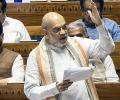
Only four working days are left for the ongoing budget session to come to an end on April 4.
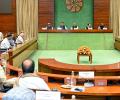
Opposition parties have called for a discussion in Parliament on the Maha Kumbh tragedy and the UP government's alleged focus on VIPs rather than the common pilgrims. Union minister Kiren Rijiju has stated that the Business Advisory Committee will decide on the agenda of the Budget Session, which will start from January 31. The Session will commence with President Droupadi Murmu addressing the joint sitting of Lok Sabha and Rajya Sabha. The Union Budget will be presented on February 1.

From the word go, Bihar growled its needs out when an MP from the state said aloud: "Give something for Bihar also, Madam." Every time the Budget mentioned cities and towns in Andhra Pradesh, "Kursi Bachao" was the call from Congress MPs.

The Budget Session of Parliament will commence on Monday and is scheduled to conclude on April 8 wherein the first part of the session will extend up to February 11, said the Lok Sabha Secretariat on Sunday.
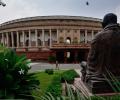
According to the Committee's recommendation, while Part 1 of the Budget session would be held from January 29 to February 15, Part 2 would be from March 8 to April 8.

Top on the government's agenda would be getting Parliament's approval to the budgetary proposals and presentation of the budget for the Union Territory of Jammu and Kashmir.

A communication from the Lok Sabha Secretariat said on Thursday that the session would conclude on April 8.

The Union Budget will be debated from today.

India Inc on Thursday pitched for lowering income tax burden on common man, increase in capital expenditure, and firm steps to contain food inflation in their nearly two-hour long interaction with finance minister Nirmala Shitharaman ahead of the Union Budget. During pre-Budget consultation with Sitharaman, the industry leaders and associations also urged the government to focus more on infrastructure development with a view to maintaining the economic growth momentum. The industry leaders also laid stress on boosting the MSME (micro, small, and medium enterprises) sector, considered a backbone of the Indian economy and main employment generator.

The government may introduce some important bill, sources said.

With the tablet carefully kept inside a red cover with a golden-coloured national emblem embossed on it instead of the briefcase, Parliament will be her next destination after the call on President Droupadi Murmu at Rashtrapati Bhawan.

So how do you rate the Modi government's 11th budget?

In the Rajya Sabha, Chairman M Venkaiah Naidu could not read out his customary closing remarks that sum up the business conducted in the House during the session, as Shiv Sena and other opposition MPs created a ruckus.
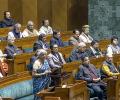
She also holds the distinction of delivering the longest budget speech at two hours and forty minutes in 2020.
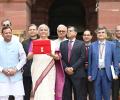
With the reality of coalition politics staring the BJP in its face, this was inevitable, points out Ramesh Menon.
While the session will begin with the President's address to the joint sitting of the two Houses, the same day the pre-budget economic survey will be tabled.
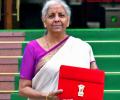
'They think quick fixes like internship in the private sector will help. 'In fact, internships have been going on for the last one decade.' 'In 2014-2015 itself, we had a ministry of skill development. None of the programmes have yielded results, still they are continuing with such schemes under some other name.' 'We don't see any seriousness on the part of the government to attack the problem of unemployment.'
Finance Minister Nirmala Sitharaman will present the Union Budget 2022 in Parliament.

The government has identified 50 public-private partnership (PPP) projects worth over Rs 60,000 crore, significantly surpassing the original targets of the National Monetisation Pipeline, said Ports, Shipping, and Waterways Minister Sarbananda Sonowal at the Business Standard Infrastructure Summit on Thursday.

Questioning the Congress's stand on caste census, the BJP leader made certain remarks on Gandhi's caste that triggered the uproar and had Congress members trooping into the well of the Lok Sabha. "Anurag Thakur insulted me and I don't want any apology from him. Abuse or insult me as hard as you can but don't forget we will pass the caste census in this Parliament for sure," the Leader of the Opposition said.

The government will introduce a new Income Tax bill next week to take forward the "trust first, scrutinise later" concept, Finance Minister Nirmala Sitharaman said on Saturday. In another major reform move, the minister announced that the Foreign Direct Investment (FDI) in the insurance sector will be increased to 100 per cent from 74 per cent.

All eyes will be on whether Sitharaman provides the much-expected tax relief for the middle class, leaving more money in their hands, as there is tax buoyancy

"An important aspect of this budget is the welfare of the poor," Modi said.

The Union Budget's focus on capital expenditure is expected to crowd-in private investment and push the GDP growth rate close to 7 per cent in the next financial year beginning April 1, said a Reserve Bank article on 'State of the Economy'. In 2023-24, capital expenditure is budgeted at Rs 10 lakh crore which will constitute 3.3 per cent of GDP. "We believe that India will decouple from macroeconomic projections of current vintage and also from the rest of the world.
The session started on January 29 and was originally slated to end on April 8 but several members had urged Speaker Om Birla to end the session earlier as they focus on electioneering for the five assemblies.
 © 2026 Rediff.com - Advertise with us - Disclaimer - Privacy Policy - Sitemap - Feedback - About us - Terms of use - Grievances